Cashu Highlights Q4/25


This progress report looks at what’s been happening across the Cashu ecosystem in the fourth quarter of 2025. It starts with our NutNovember hackathon and the Bitcoin for Signal campaign, moves through updates to libraries and wallets, and wraps up with new projects, including Cashu for Community Sovereignty and CypherTap.
NutNovember
NutNovember was a month-long hackathon that encouraged developers, creators, and educators to build with Cashu. The idea grew out of Derek Ross’s announcement on Nostr that he would be using Cashu every day throughout November. Over the course of the month, we received 23 entries in total, making it great to see so many people getting involved and building with Cashu.
Submissions spanned a wide mix of ideas and implementations, with 12 first-time contributions highlighting the accessibility of our current libraries and documentation. You can take a look at the winners across six prize categories on the hackathon’s website.
Bitcoin for Signal
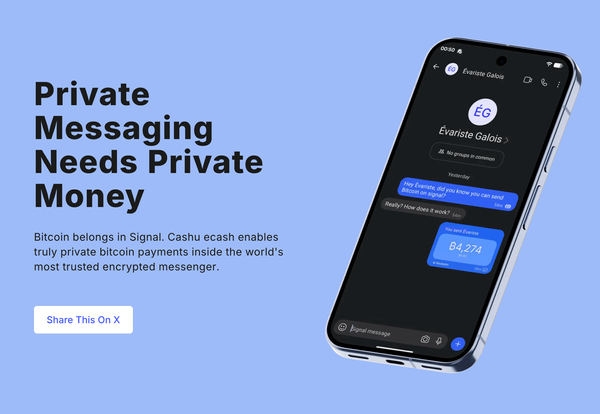
In October, we launched a campaign to encourage discussion around integrating Bitcoin payments into Signal. The idea originated from a hackathon project by lollerfirst and zeugmaster at btc++ in Berlin, where a Cashu wallet was integrated into Signal.
Signal already includes a payment feature using MobileCoin, though the speculative cryptocurrency hasn’t gained meaningful adoption, and many Signal users are not aware that the feature exists. In response, our campaign made the case for Bitcoin as the most widely adopted cryptocurrency and a stronger choice for payments, with Cashu providing the missing privacy aligned with Signal’s focus on secure communication.
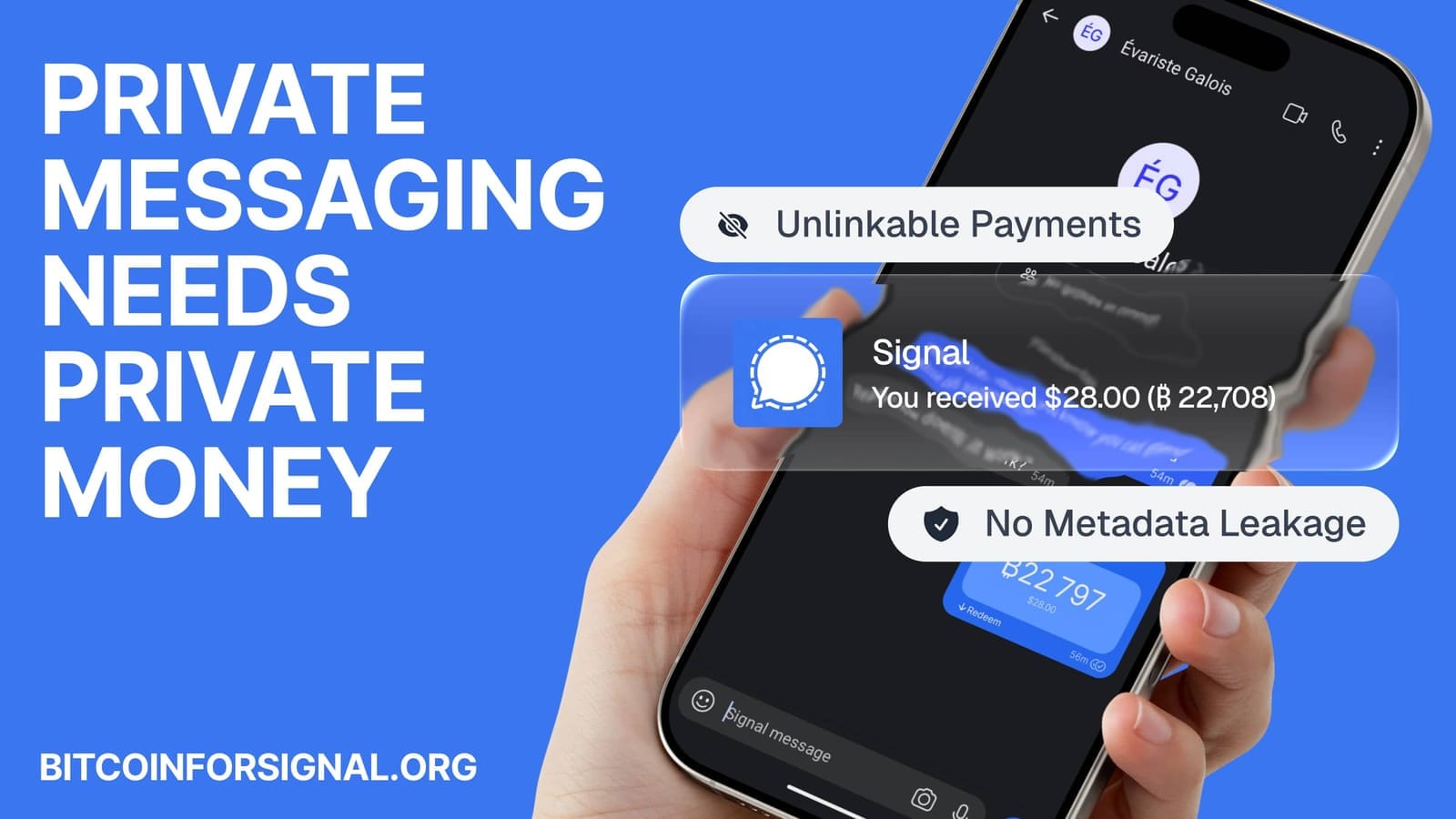
Bitcoin for Signal received strong attention and support from Bitcoin OGs and the wider community. Further information about the campaign can be found on the campaign’s website, along with a more detailed article on the concept and design by our designer Erik, who led the campaign, published on our blog.
Libraries
Cashu Developer Kit (CDK)
Over the last quarter, CDK made steady progress with several releases. The most significant of these was v0.14.0, followed by v0.14.1 and v0.14.2 with further refinements.
Release v0.14.0 added saga patterns for melt and swap operations in cdk-mintd, ensuring more robust error recovery and state consistency in these critical operations. Asynchronous melt processing was introduced, allowing wallets to handle these operations without blocking other activity. Privacy also received a boost with the introduction of a Tor mint connector that uses isolated circuits.
On the wallet side, support was added for paying to human-readable addresses, including Lightning addresses and BIP-353. The ingle button component function interface (FFI) now also supports decoding BOLT11 and BOLT12 Lightning invoices.
CDK Python
CDK Python joins our growing family of CDK bindings for Swift, Kotlin, and Go. It allows developers to build and manage Cashu wallets in Python. Core wallet operations, such as minting, melting, sending, and receiving tokens, remain aligned with the Rust implementation, without requiring developers to write Rust code directly.
Cashu-ts
With v3.0.0, Cashu-ts delivered a major update featuring a redesigned API and a new core class written from scratch. The new interface provides a more structured approach to wallet operations and makes it easier for developers to discover and use more advanced features of the library. Further releases prepare for the introduction of Pay-to-Blinded-Key (P2BK), a more privacy-preserving variant of P2PK that is currently in development.
Wallet Updates
Macadamia
Macadamia, a native iOS Cashu wallet, introduced support for splitting and sending funds from multiple mints based on a preferred amount distribution. Recent updates also added P2BK and expanded support to displaying amounts in 33 additional fiat currencies. Macadamia now also supports NIP-17 and contactless NFC payments.
cashu.me
cashu.me received a redesign focused on usability and onboarding. Users can now restore wallets from a seed phrase and recover previously used mints via backups. The mint discovery page now includes additional information such as ratings and recommendations.
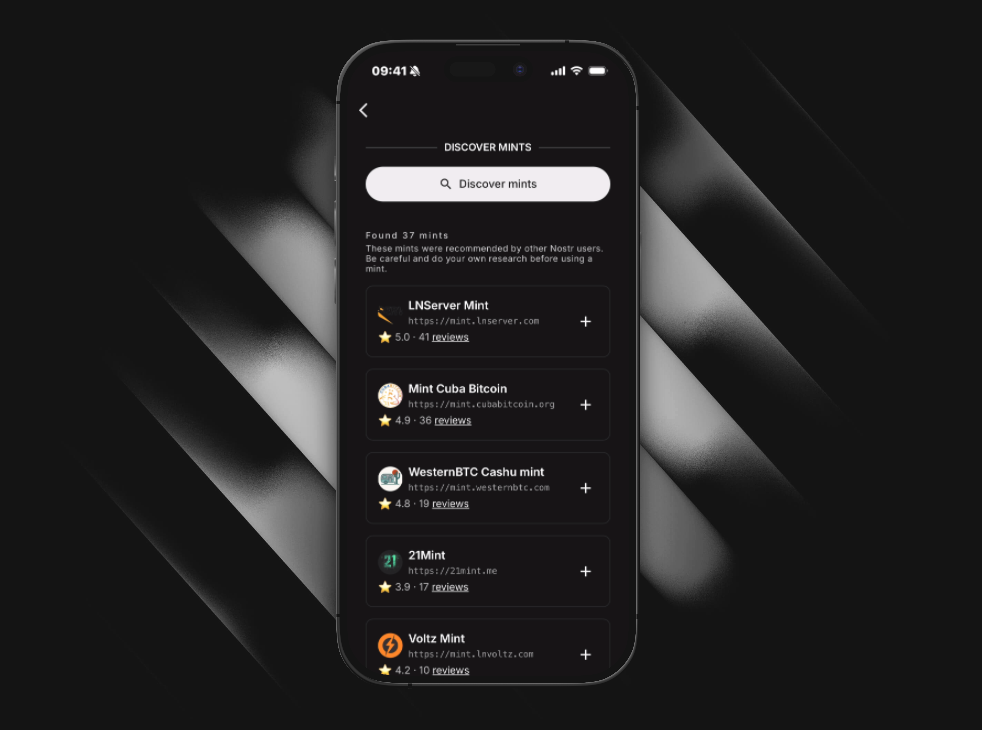
A Nostr-based web of trust feature was also introduced, allowing users to enter their Nostr key and discover mints used by people they trust.
Minibits
Minibits is an ecash mobile wallet with a focus on performance and usability. It now supports NFC payments on Android and is also available on the iOS App Store.
Projects
Cashu for Community Sovereignty
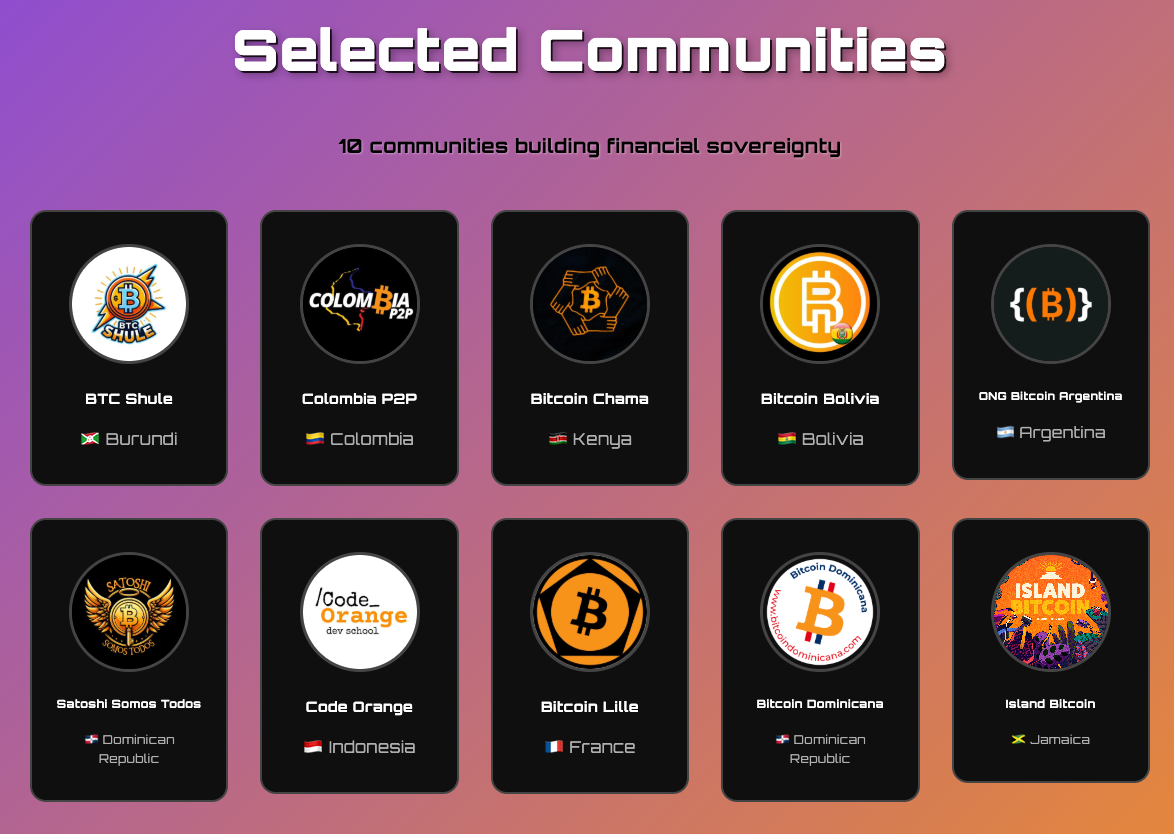
The Cashu for Community Sovereignty initiative aims to provide private and censorship-resistant payment systems for communities under authoritarian regimes. It addresses challenges such as financial surveillance, censorship, and limited access to global payment systems in parts of Latin America. The initiative plans to train 10 communities to operate Cashu mints and Lightning nodes. Following the completion of the application phase, the project has now entered the infrastructure and implementation phase.
CypherTap
CypherTap is a single-button component that lets developers add a Cashu wallet to any web app. It is based on NIP-60, allowing the wallet to stay synced across apps. CypherTap supports multiple Nostr login methods, Lightning payments, generating and receiving ecash tokens, and multi-mint management with automatic token consolidation. It includes a responsive UI for both desktop and mobile.
Wrap-up
Overall, Q4 saw continued progress across the Cashu ecosystem, with steady library improvements and ongoing wallet updates. Strong participation in our NutNovember hackathon, including several first-time contributions, reflects continued work on libraries and documentation that makes it easier for developers and users to get started with Cashu.
The Bitcoin for Signal campaign demonstrated how a working proof of concept, paired with clear messaging, can spark broader discussion around potential Cashu integration. Overall, this year saw notable growth in activity and contributions, and we are excited to carry that energy into 2026.